66
days
The average time a new habit took to feel automatic. The range ran from 18 to 254.
Lally and others, European Journal of Social Psychology, 2010Journals built on how habits actually form.
The range

Five habits. Twelve weeks. Keep count.

Ninety days. One goal. Begin again as often as needed.

The evening wind-down journal. Put the day down.
Dated 2027 work diary. Two days per page.
Swipe to see all four →
12-week habit journal
Five habits. Twelve weeks. Keep count.
6 × 9 in84 pagesUndated
Each habit is tied to a time, a place and something you already do.
Built on research by Gollwitzer, if-then plans.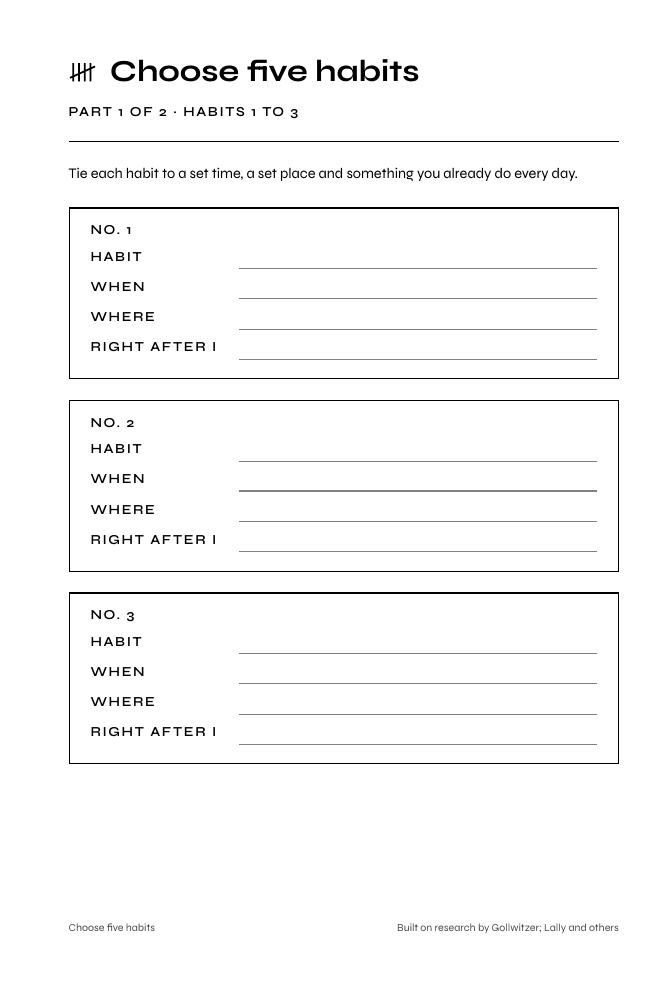
One grid a week. Five habits, seven days. Totals in tally marks.
Built on research by Harkin and others (2016), progress tracking.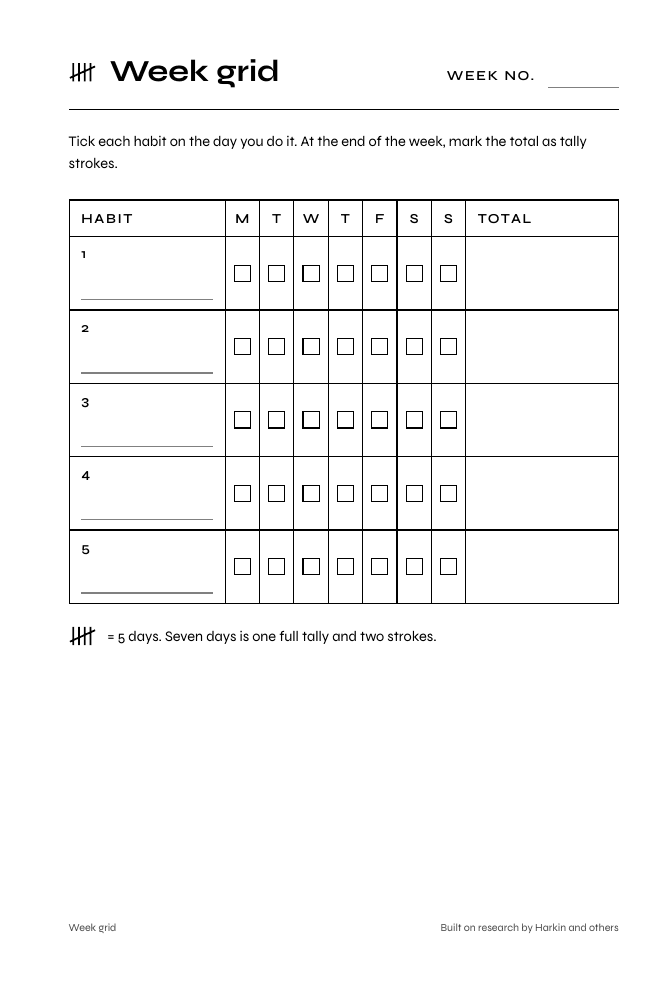
One missed day is normal. Every week ends with a comeback box. Twelve weeks gives a habit room to settle.
Built on research by Lally and others (2010), repetition in a fixed setting.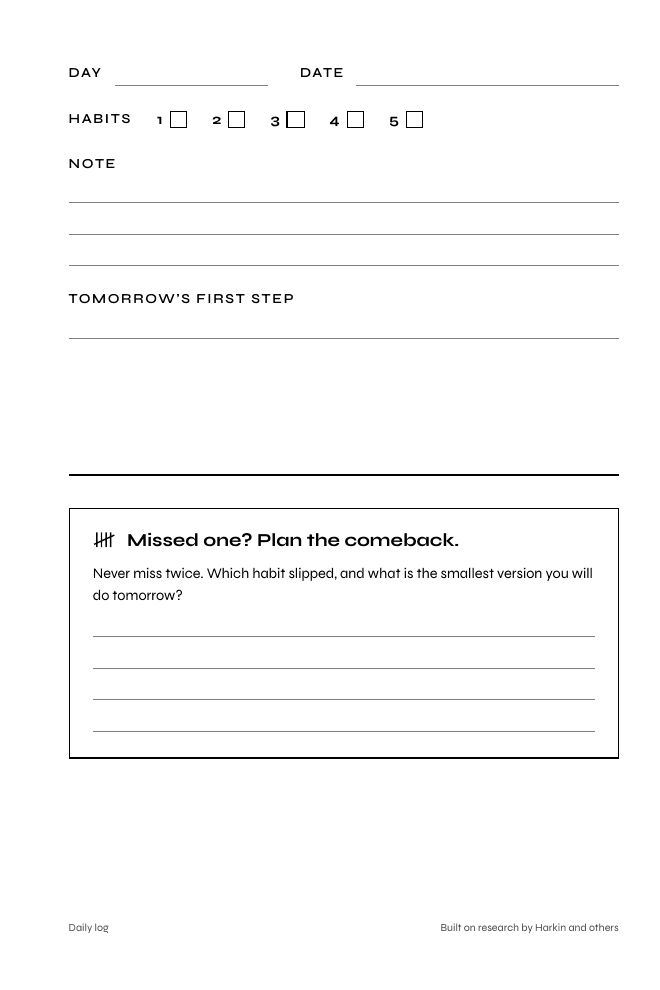

90-day goal journal
Ninety days. One goal. Begin again as often as needed.
6 × 9 in128 pagesUndated
One wish. The best outcome. The main obstacle. Then the plan.
Built on research by Oettingen, goal-and-obstacle planning.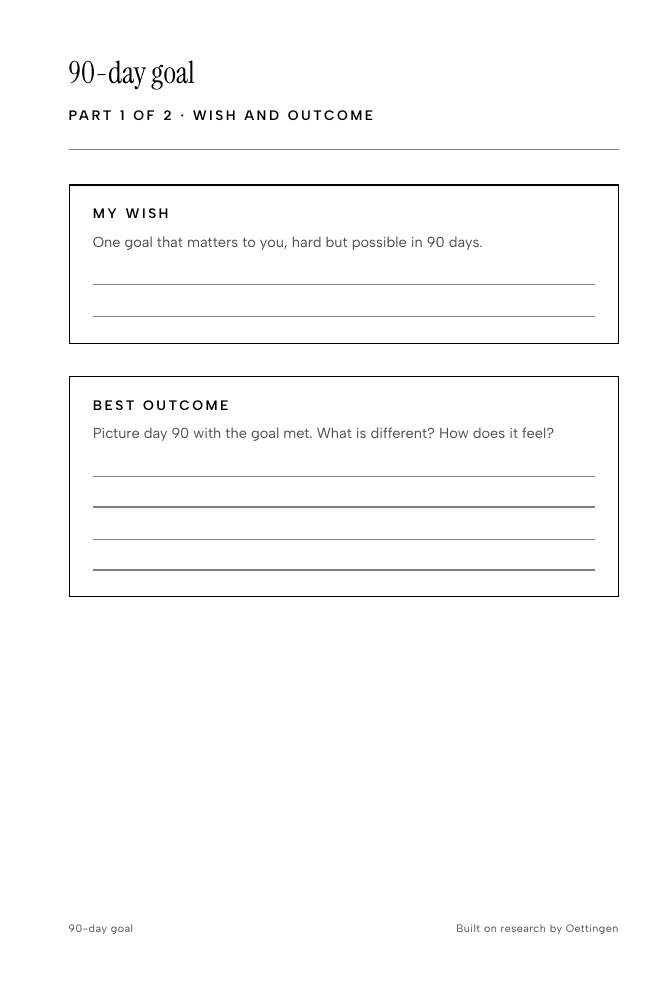
Three aims a week. Three if-then lines for the moments that knock you off course.
Built on research by Gollwitzer, if-then plans.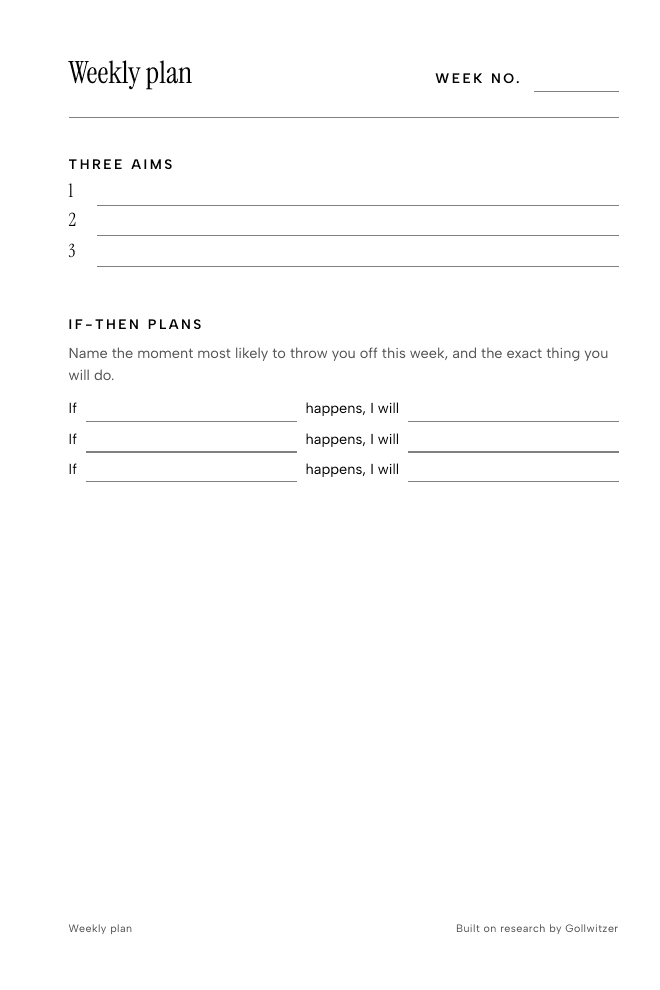
A restart page. New date. Smaller first step. Carry on.
Built on research by Dai, Milkman and Riis (2014), the fresh-start effect.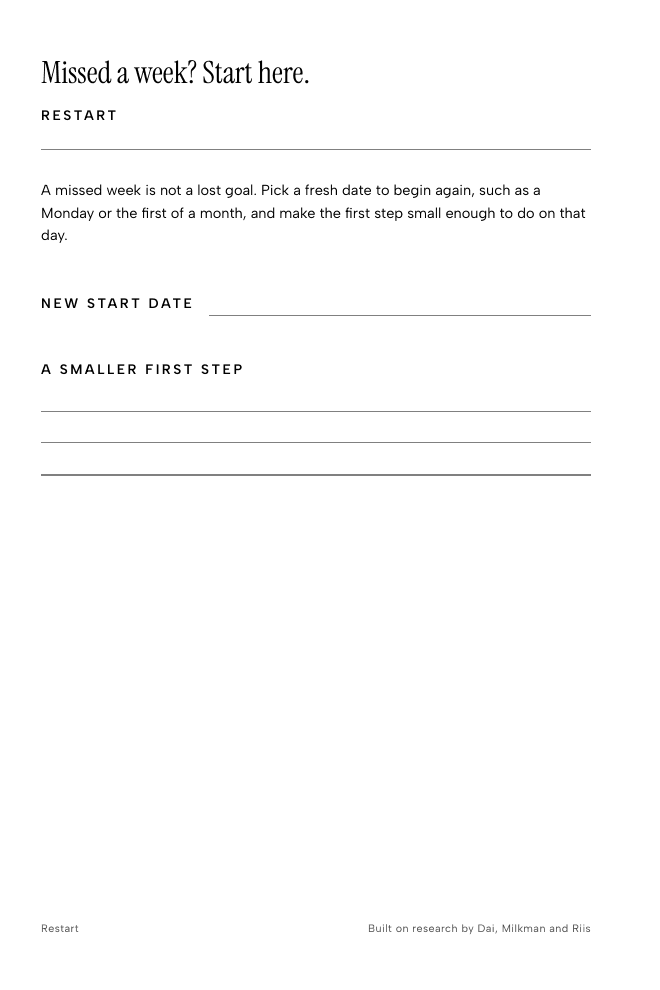

90-night wind-down journal
Put the day down. Pick it up tomorrow.
6 × 9 in110 pagesUndated
Plan the last hour once. Five steps, same order, every night. Phone in another room.
A routine, not a promise.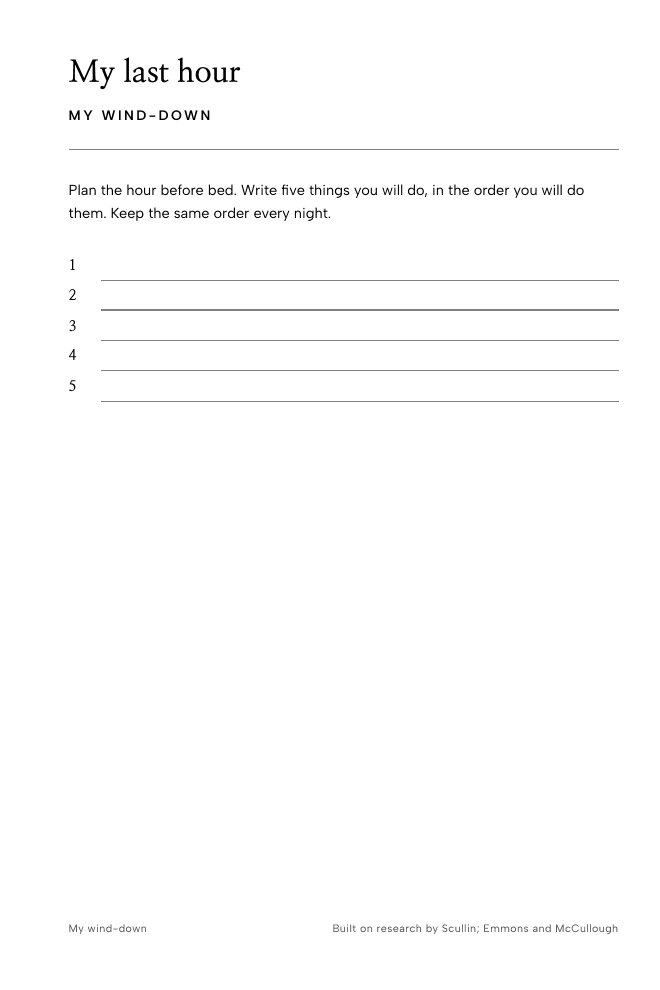
Tomorrow's list. Then worry parking: each worry gets a next step, or gets let go.
Built on research by Scullin and others (2018), bedtime to-do lists; Borkovec, postponing worry.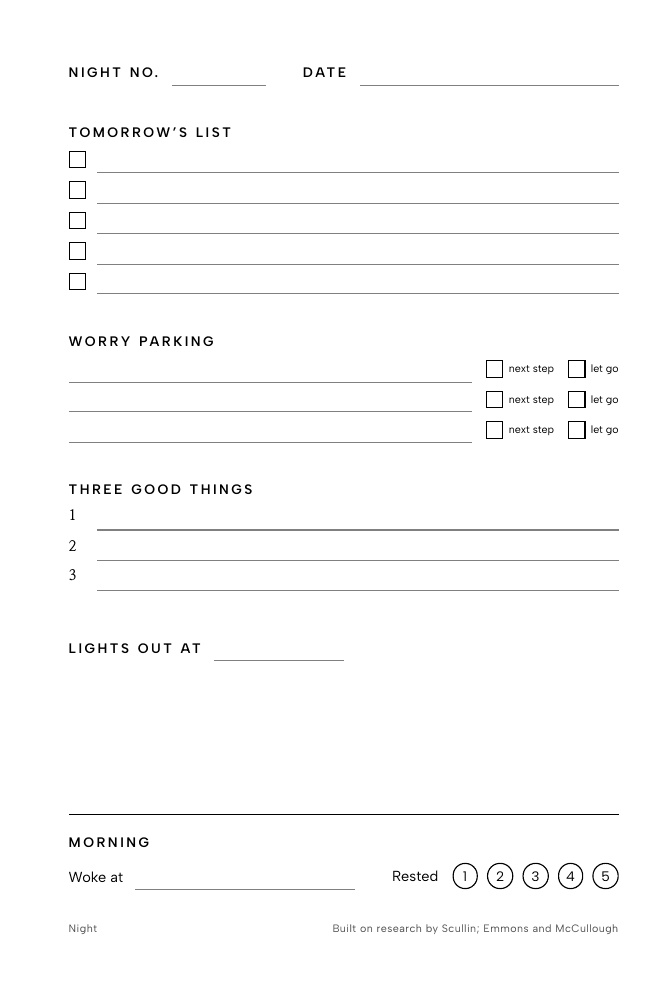
Three lines before the light goes off. A short check every seventh night.
Built on research by Emmons and McCullough (2003); Seligman and others (2005).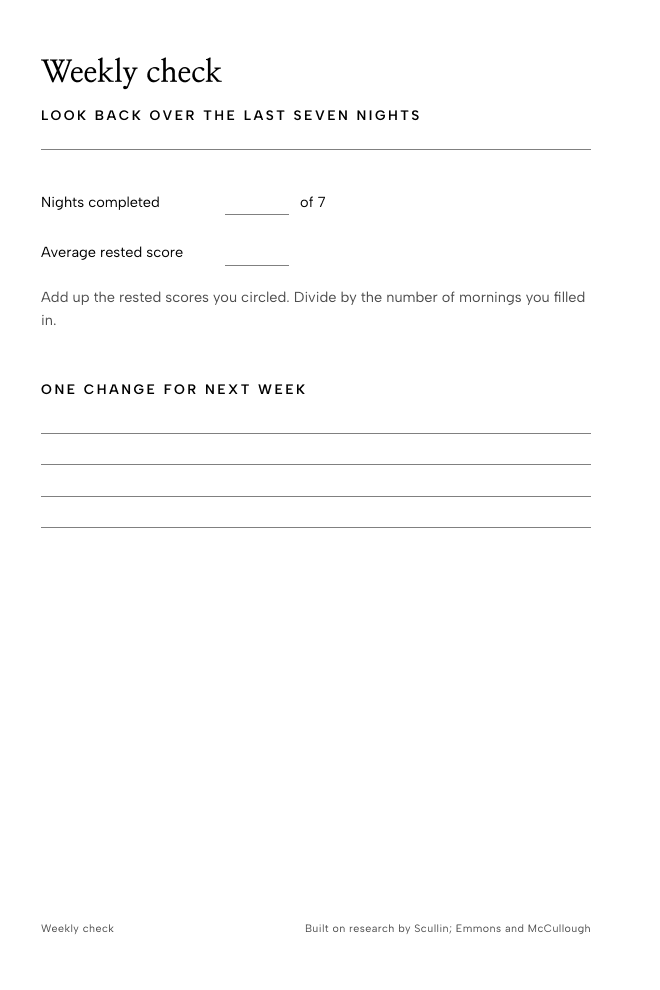
Year view up front. Fifty-two weeks, four pages each. Two days per page.
Every date for 2027 is already printed.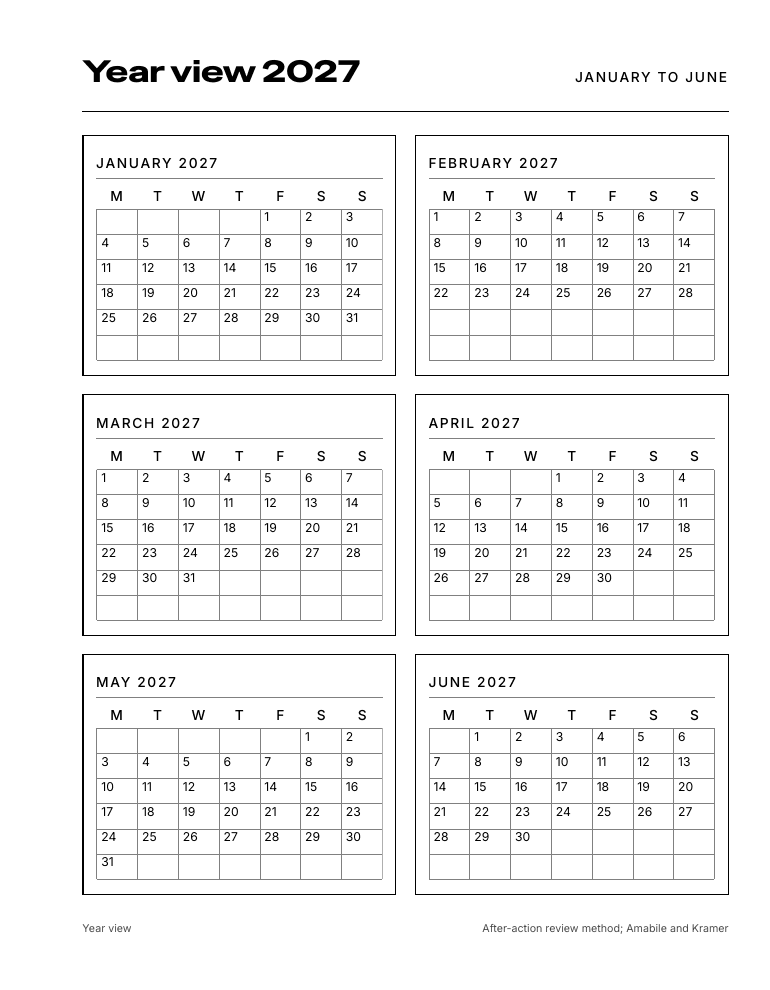
Then a work log for calls, meetings and files. One line to carry forward.
Time-blocking practice. A working method, not a tested study.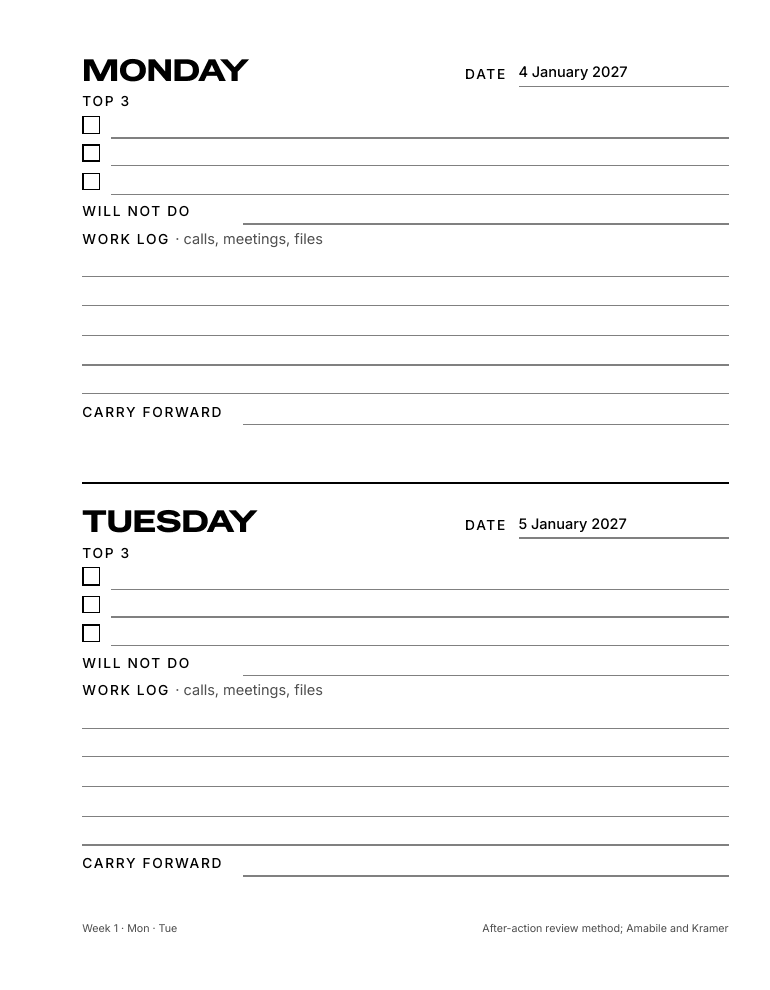
What was planned? What happened? Why the difference? What to keep, what to fix? Then one small win.
Built on the Army after-action review method; Amabile and Kramer, the progress principle.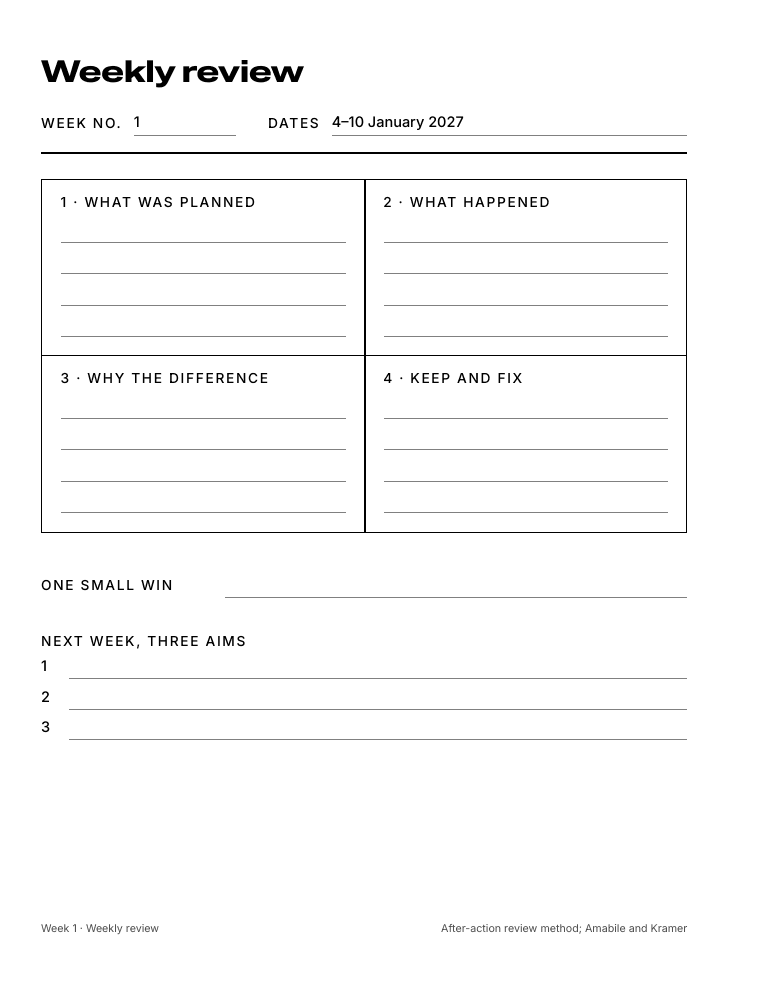

The art
Canvas to cover
The founder paints each canvas. It is photographed, framed and set on the cover. Drag to compare.

The science
The average time a new habit took to feel automatic. The range ran from 18 to 254.
Lally and others, European Journal of Social Psychology, 2010Pooled in one review. People who tracked progress moved closer to their goals.
Harkin and others, Psychological Bulletin, 2016Pooled in one review. “If this happens, I will do that” plans helped people follow through.
Gollwitzer and Sheeran, Advances in Experimental Social Psychology, 2006Each page carries its research credit in the footer. The journals offer a method. They make no health claims.
Formats
On Amazon
Direct order